
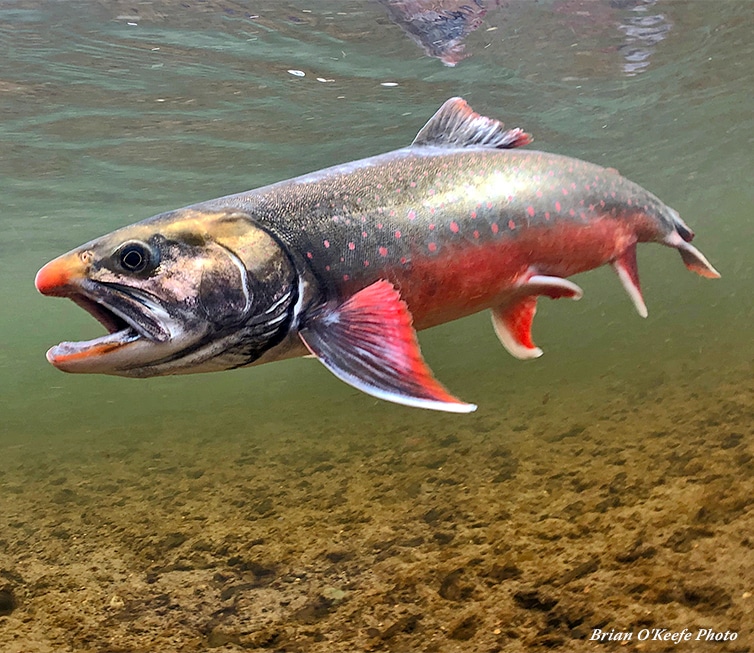
The native salmonid populations of the upper Skagit River—including Rainbow Trout, Steelhead, Bull Trout, and Dolly Varden—have a rich and complex evolutionary history shaped by the region’s geology, hydrology, glacial past, and human influence. In our latest research project, funded by Seattle City Light, the Genidaqs team is applying advanced genomic tools to better understand the origins, diversity, and connectivity of these cold-water fish species in the upper Skagit River basin.
Our study seeks to answer several pressing ecological and conservation questions:
These questions are central to understanding long-term species persistence, especially in a rapidly changing environment.
Our recently completed genetic assessment revealed that native salmonid populations in the upper Skagit River are genetically distinct from those found below the Skagit Gorge—the lowest dam in the system. This discovery has catalyzed our current investigation, aimed at tracing the genetic identities of native trout to guide effective conservation and management strategies.
We’re currently collaborating with City Light and other project partners to define key research priorities and agree on shared methodologies. This consensus-driven approach ensures scientific rigor while aligning with broader conservation goals in the basin.
Although the study is grounded in academic research, its implications extend to real-world decision-making. As policymakers and stakeholders consider the reintroduction of anadromous (ocean-going) salmonids upstream of current barriers, it is critical to understand the genetic composition of resident fish and the consequences of non-volitional fish passage for long-term species health.
Our work in the Skagit River Basin with Seattle City Light has been deeply rewarding. We thank our collaborators, including HDR for their technical leadership, and City Light for their ongoing support and commitment to ecological stewardship. Stay tuned for future updates as we continue to uncover the genetic legacy of the Skagit’s native fish.
Genidaqs
+1 916-231-1681 / genidaqs@fishsciences.com
3300 Industrial Blvd., Suite 100
West Sacramento, CA 95691
Cramer Fish Sciences
©2026

"*" indicates required fields